
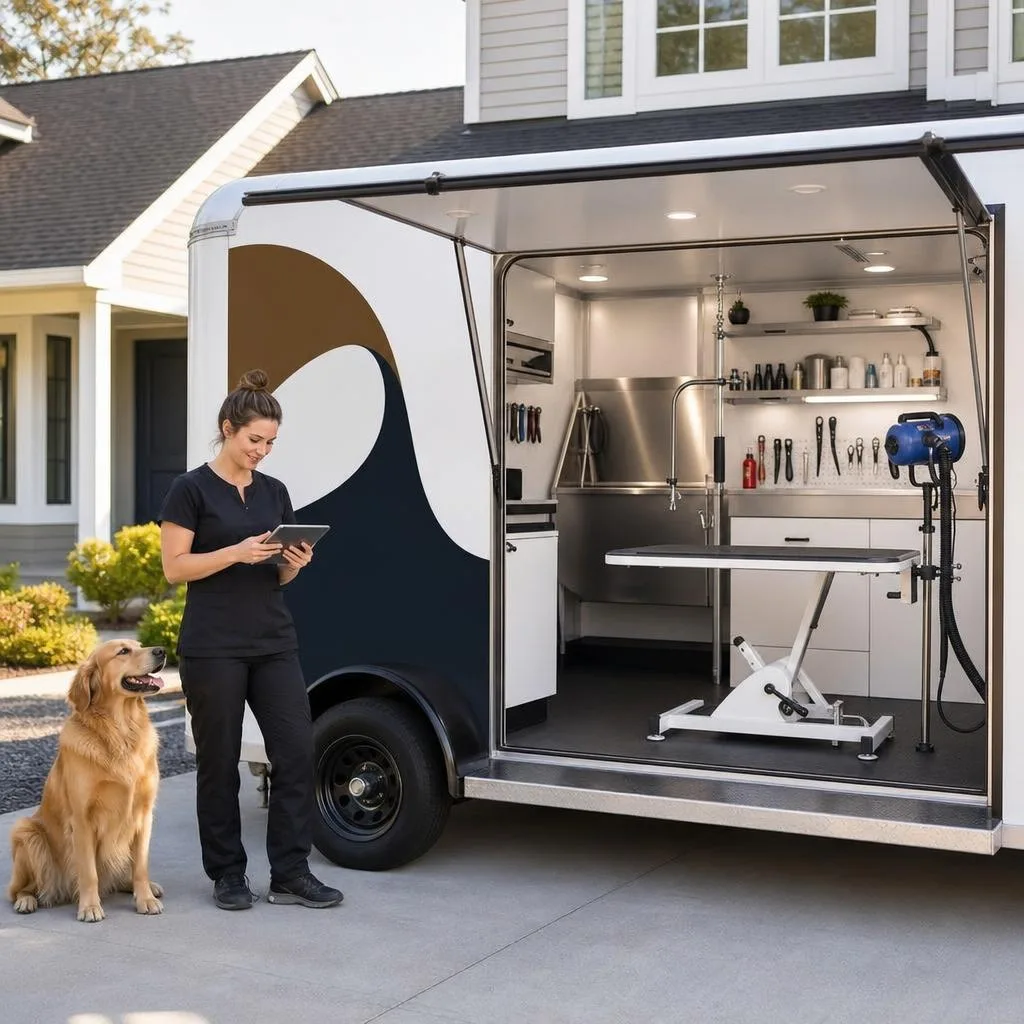
Dog grooming trailer financing can help you launch or expand a mobile grooming business without paying the full equipment cost upfront.
Key takeaways
- Compare trailer loans, equipment financing, business lines of credit, and other funding options before applying.
- Strong applications show clear pricing, realistic revenue forecasts, good credit habits, and a practical repayment plan.
- Your trailer budget must include grooming equipment, vehicle costs, insurance, permits, maintenance, marketing, and working capital.
- The right financing payment should fit comfortably within your expected monthly cash flow, not just your projected sales.
What is dog grooming trailer financing?
Dog grooming trailer financing is funding used to buy, build, or upgrade a mobile dog grooming trailer and its essential equipment. Depending on the lender, the financing may cover the trailer shell, plumbing, electrical systems, tubs, dryers, tables, generators, storage, and other business equipment.
Instead of paying a large amount in cash, you make scheduled payments over an agreed term. The trailer may secure the loan, which can make this type of funding easier to obtain than an unsecured loan. However, approval terms vary based on your credit history, time in business, revenue, down payment, and the trailer’s value.
How much does a mobile dog grooming trailer cost?
A mobile dog grooming trailer commonly costs between $20,000 and $100,000 or more, depending on its size, condition, customization, and equipment package.
A used trailer may offer a lower entry price, while a new custom build can provide better layout efficiency and warranty protection. Before applying for dog grooming business loans, create a complete project budget rather than focusing only on the purchase price.
| Expense | Typical planning range | Why it matters |
|---|---|---|
| Used grooming trailer | $20,000–$50,000 | Lower purchase cost, but inspection and repairs are important. |
| New custom trailer | $50,000–$100,000+ | More customization, modern equipment, and possible warranty coverage. |
| Vehicle or towing setup | $10,000–$60,000+ | May be needed to tow the trailer safely and legally. |
| Equipment and supplies | $3,000–$15,000 | Includes clippers, dryers, tubs, tables, tools, and opening inventory. |
| Working capital | Three to six months of expenses | Helps cover fuel, payroll, insurance, repairs, and marketing during ramp-up. |
These figures are planning estimates, not lender quotes. Ask builders for itemized bids and confirm whether sales tax, delivery, installation, licensing, and warranties are included.
What financing options are available for a dog grooming trailer?
The main financing options are trailer and equipment loans, business term loans, equipment leases, business lines of credit, and personal funds combined with business financing. The best choice depends on your credit, business age, cash flow, and the amount you need.
Is equipment financing a good choice for a grooming trailer?
Equipment financing can be a strong choice when the trailer is the main purchase and the lender accepts mobile grooming equipment as collateral. The lender usually pays the seller, and you repay the balance over a fixed term.
This option may offer predictable payments and a simpler application than a broad-purpose business loan. Ask about the required down payment, interest rate, origination fee, personal guarantee, early payoff rules, and what happens if the trailer is damaged or sold.
Can a business line of credit fund a mobile grooming business?
A business line of credit can help cover smaller, changing expenses such as supplies, repairs, advertising, fuel, and seasonal cash-flow gaps. It is usually less suitable for financing the entire trailer because rates may be variable and the credit limit may be too low.
Use a line of credit for short-term needs that you can repay quickly. Avoid using it to cover ongoing losses or a payment that your normal revenue cannot support.
Should I consider an equipment lease?
An equipment lease may reduce the upfront cash required, but it can cost more over time and may give you fewer ownership rights. Some leases include maintenance or an end-of-term purchase option, while others require you to return the equipment.
Compare the total amount paid, not only the monthly payment. A low payment with a long term or large final payment may not be the least expensive option.
How do dog grooming business loans work?
Dog grooming business loans provide capital for a trailer, vehicle, equipment, startup costs, expansion, or working capital. You receive funds under a defined agreement and repay the lender through regular principal and interest payments.
Traditional lenders often prefer established businesses with strong financial records. Online lenders may move faster but can charge higher rates or fees. Some lenders also offer specialized commercial vehicle or equipment programs.
| Funding type | Best for | Typical strengths | Watch for |
|---|---|---|---|
| Equipment loan | Buying a trailer and installed equipment | Fixed payments and asset-based approval | Collateral, down payment, and equipment restrictions |
| Term business loan | Large purchases plus related startup costs | Flexible use and clear repayment schedule | May require stronger revenue and credit |
| Business line of credit | Repairs, supplies, and short-term needs | Draw only what you need | Variable rates and renewal requirements |
| Equipment lease | Preserving cash for a new operation | Lower initial outlay in some cases | Ownership terms and higher total cost |
What do lenders require for dog grooming trailer financing?
Lenders usually require identification, a business plan or loan summary, financial records, bank statements, credit information, a trailer quote, and proof that the business can repay the debt.
Prepare the following documents before submitting applications:
- Business registration, tax identification number, and ownership details.
- Personal and business tax returns, if available.
- Six to twelve months of business bank statements for an established company.
- Profit and loss statements, balance sheets, and accounts receivable details.
- A purchase quote with the trailer’s specifications, age, serial number, and warranty.
- Personal credit information and details about existing debts.
- Insurance estimates, licenses, permits, and commercial vehicle information.
- A simple forecast showing customers, average ticket, operating days, revenue, and expenses.
If you are a startup, lenders may rely more heavily on your personal credit, savings, industry experience, collateral, and business plan. A clear plan can reduce uncertainty even when you do not yet have business revenue.
How can I improve my chance of loan approval?
You can improve approval odds by lowering existing debt, correcting credit report errors, increasing your down payment, and showing that your expected cash flow supports the requested payment.
- Check your personal and business credit reports for errors and unresolved accounts.
- Separate business and personal banking so your revenue and expenses are easy to verify.
- Get at least two written trailer quotes and compare warranties, delivery dates, and included equipment.
- Build a conservative forecast using realistic appointment volume rather than your best-case schedule.
- Explain your customer acquisition plan, including local search, referrals, groomer partnerships, and repeat bookings.
- Apply with lenders whose minimum requirements match your business profile.
Do not submit a large number of applications without reviewing their credit-check policies. Multiple hard inquiries within a short period may affect your credit profile, depending on the lender and scoring model.
How much should my monthly financing payment be?
Your monthly financing payment should be low enough that your business can cover it after normal operating costs, taxes, owner pay, and a repair reserve. Do not choose a loan only because its payment is the lowest.
Estimate monthly cash flow with this basic formula:
Monthly revenue − operating expenses − taxes − owner pay − maintenance reserve = cash available for debt payments.
For example, suppose a mobile groomer completes 120 appointments per month at an average ticket of $95. Gross revenue would be $11,400. After fuel, supplies, insurance, software, marketing, maintenance, taxes, and owner pay, the amount available for debt service may be far lower. Test the payment against a slower month, not only the forecasted average.
| Scenario | Appointments per month | Average ticket | Gross monthly revenue |
|---|---|---|---|
| Conservative | 70 | $85 | $5,950 |
| Expected | 110 | $95 | $10,450 |
| Strong | 140 | $105 | $14,700 |
Use these scenarios to stress-test your payment. If one slow month would force you to use credit cards or miss other bills, reduce the trailer budget, increase your cash reserve, or delay the purchase until demand is more certain.
What mistakes should I avoid when financing a grooming trailer?
The most common mistakes are underestimating total costs, accepting an expensive loan without comparing offers, and borrowing based on optimistic revenue assumptions.
- Ignoring total project cost: Include towing, registration, insurance, build-out, permits, utilities, branding, and opening supplies.
- Choosing payment over total cost: A longer term may reduce the monthly bill but increase total interest.
- Skipping a professional inspection: Check plumbing, electrical systems, ventilation, flooring, generators, tires, brakes, and water systems.
- Buying too much trailer: Extra space and luxury features can increase debt without increasing appointment capacity.
- Using short-term funding for long-term assets: Match the loan term to the useful life of the trailer and equipment.
- Failing to plan for downtime: Keep cash available for repairs, illness, weather, and equipment replacement.
Is dog grooming trailer financing right for my business?
Dog grooming trailer financing may be right if you have validated demand, a clear service area, reliable pricing, and enough cash flow or reserves to handle payments during slow periods.
It may be better to delay borrowing if you have not tested your market, lack an emergency reserve, or cannot explain how the trailer will create profitable capacity. You could first rent equipment, work from a shared salon, build a customer waitlist, or operate a smaller service model to prove demand.
Review the decision using these questions:
- How many paid appointments do I need each month to cover all costs?
- Can I reach that appointment level within a realistic ramp-up period?
- What happens if the trailer is unavailable for two weeks?
- Will the trailer support higher prices, faster service, or a larger service area?
- Do I have enough savings for a down payment and several months of operating expenses?
What should I ask before signing a financing agreement?
Before signing, ask for the annual percentage rate, total repayment amount, payment schedule, fees, collateral requirements, default terms, and early payoff conditions in writing.
Also confirm whether payments begin before the trailer is delivered, whether the lender allows extra payments without a penalty, and whether insurance must meet specific limits. Have an accountant or business adviser review the agreement if the terms are difficult to understand.
What are the next steps for getting funding?
The next steps are to define your budget, validate demand, prepare documents, compare lenders, and select financing that protects your cash flow.
- Calculate the full cost of the trailer, vehicle, equipment, launch, and reserve.
- Set a maximum monthly payment based on conservative cash-flow estimates.
- Request detailed quotes from trailer builders and sellers.
- Organize financial records and write a short business funding summary.
- Compare at least three financing offers by APR, total cost, fees, term, and flexibility.
- Review the final agreement before accepting funds and keep cash reserved for operations.
Modern Marks Business Consultants can help you think through the numbers, risks, and growth plan before you commit to financing. Start with the Free Business Health Audit to identify gaps in your operations, cash flow, and readiness to scale.
