
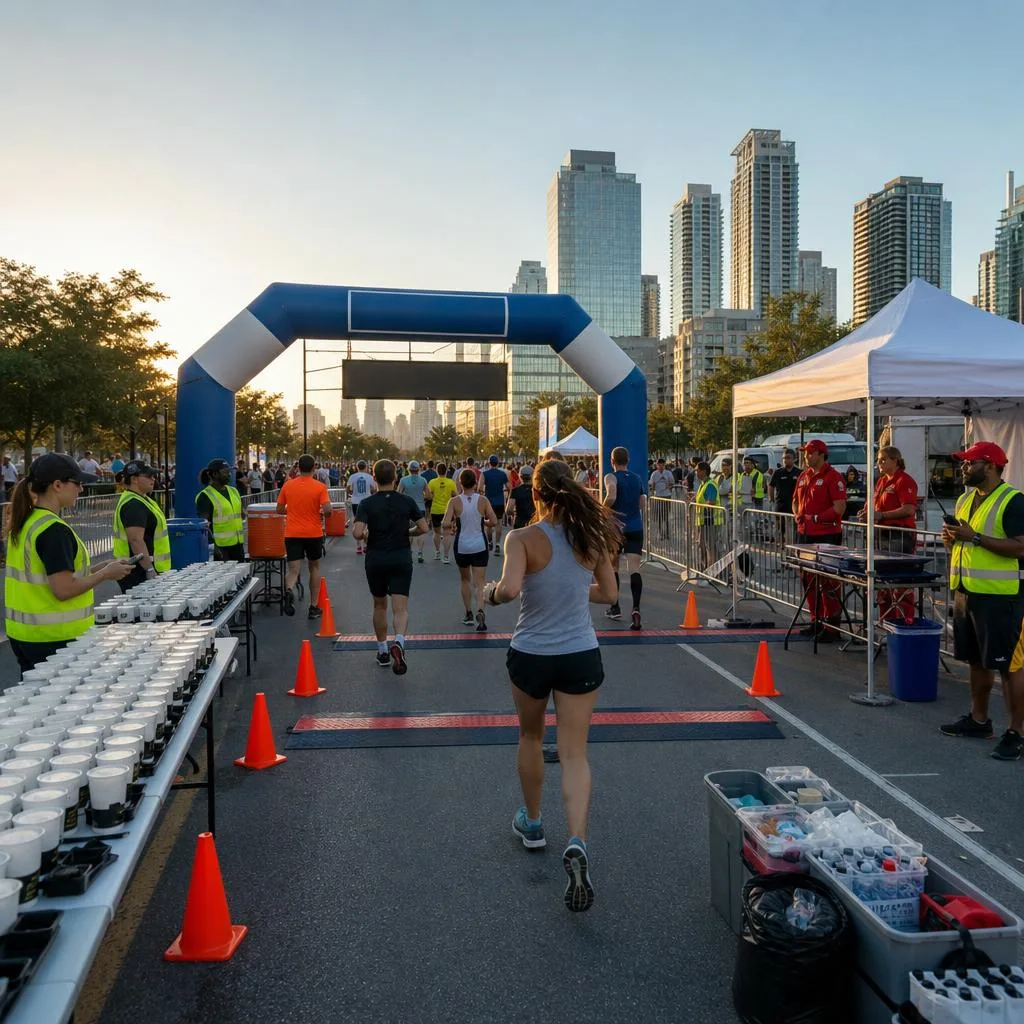
Key takeaways
- The best event planning equipment for runners combines runner safety gear, timing tools, hydration supplies, communication systems, and weather-ready support.
- Choose equipment based on race distance, participant count, course design, event budget, and emergency needs.
- A detailed equipment checklist helps organizers control costs, assign ownership, and prevent race-day delays.
- Test every critical item before race day and prepare backup options for power, timing, communication, and weather problems.
Event planning equipment for runners should make registration, race timing, course navigation, hydration, medical support, and finish-line operations safe and simple. The right equipment also helps your team deliver a professional experience without buying items you will rarely use.
What event planning equipment do runners need?
Runners need clear course markers, reliable timing, safe hydration stations, visible medical support, secure start and finish areas, and easy access to race information. Event organizers also need equipment that helps staff communicate and respond quickly.
Start by separating equipment into five groups: runner experience, safety, operations, communication, and backup supplies. This approach prevents a common planning mistake: focusing on promotional items while overlooking the basic systems that keep the event moving.
| Equipment group | Examples | Why it matters |
|---|---|---|
| Runner experience | Bibs, medals, signage, race clocks, registration tables | Creates a clear and enjoyable event journey |
| Safety and medical | First-aid kits, radios, AED access, cones, reflective vests | Helps staff prevent and manage emergencies |
| Course support | Arrows, mile markers, barriers, portable toilets, water stations | Guides runners and supports basic needs |
| Operations | Tents, tables, power banks, laptops, printers, storage bins | Keeps registration and logistics organized |
| Communication | Two-way radios, megaphones, public address systems | Allows fast coordination across the course |
How do you build an event planning equipment checklist for runners?
Build the checklist from the runner journey, then add safety, staffing, and backup requirements. Walk through every stage from arrival to departure and record what equipment is needed at each point.
- List each event zone, including parking, registration, start, course aid stations, medical points, finish, awards, and cleanup.
- For every zone, identify the equipment, quantity, owner, delivery time, setup time, and return plan.
- Mark each item as essential, useful, or optional so your budget protects the most important needs first.
- Confirm whether each item will be purchased, rented, borrowed, or supplied by a partner.
- Test essential equipment before race day and prepare a backup for anything that could stop the event.
Use a shared spreadsheet or event management platform so the race director, volunteer lead, timing provider, and safety coordinator see the same list. Give each item a named owner. “Someone will bring it” is not an equipment plan.
What should be on a race-day equipment checklist?
A race-day checklist should include quantities, locations, responsible staff, setup deadlines, and backup plans for every critical item. Keep one printed copy with the operations lead even if your main plan is digital.
| Race-day area | Core equipment | Important checks |
|---|---|---|
| Registration | Tables, chairs, bibs, pins, waiver forms, laptops, printers | Confirm power, internet, supplies, and participant data |
| Start line | Arch, banner, timing mat, clock, barriers, loudspeaker | Test the countdown, announcements, and timing system |
| Course | Arrows, cones, mile markers, radios, vests, water tables | Inspect visibility, placement, and access for emergency vehicles |
| Finish line | Timing equipment, medals, recovery supplies, finish chute | Protect the chute from crowding and record finish data |
| Medical | First-aid kits, gloves, blankets, ice, radios, AED access | Confirm trained personnel, locations, and escalation procedures |
Which race timing equipment is best for a running event?
Chip timing is usually the best choice for medium and large running events because it records individual finish times accurately and reduces manual work. A simple stopwatch system may be enough for a small, low-cost community run.
Common options include disposable bib chips, reusable shoe tags, finish-line cameras, timing mats, digital clocks, and manual backup sheets. The best setup depends on participant volume, course length, timing expectations, and budget.
| Event size | Recommended timing setup | Best use |
|---|---|---|
| Up to 100 runners | Stopwatches, bib numbers, finish recorder, backup video | Small fun runs and informal community races |
| 100–1,000 runners | Chip timing, timing mats, finish clock, manual backup | Road races and charity events |
| More than 1,000 runners | Professional chip timing, split points, live results, redundancy | Large races with strict result expectations |
Ask your timing provider about internet requirements, battery life, data export, result correction, and technical support. Run a complete test using sample bibs before participants arrive.
What safety equipment should a running event have?
A running event should have visible course controls, first-aid resources, trained medical staff, communication tools, and a written emergency plan. Safety equipment must be easy for volunteers and runners to find.
- First-aid kits at the start, finish, and planned medical points.
- Reflective or brightly colored vests for course marshals and medical teams.
- Two-way radios or a reliable group communication system.
- Traffic cones, barriers, caution signs, and directional arrows.
- Cold packs, drinking water, blankets, gloves, and waste containers.
- Access to an automated external defibrillator through event staff or local emergency services.
- Portable lighting for early morning, evening, or poorly lit areas.
Do not treat safety items as a substitute for professional planning. Coordinate with local authorities, medical providers, property owners, and traffic teams. Your event plan should explain who can pause the race, how an emergency is reported, and where responders can enter the course.
How much does event planning equipment for runners cost?
The cost of event planning equipment for runners can range from a few hundred dollars for a small fun run to many thousands for a large race with professional timing, traffic control, medical coverage, and rented infrastructure.
Separate fixed costs from participant-based costs. Tents, radios, and signage may serve the whole event, while bibs, medals, cups, and shirts increase with the number of runners.
| Budget area | Lower-cost approach | Higher-service approach |
|---|---|---|
| Timing | Manual recording and basic clocks | Professional chip timing and live results |
| Infrastructure | Borrowed tables, simple tents, reusable signs | Rented arches, barricades, tents, and staging |
| Hydration | Bulk water and reusable containers | Multiple staffed stations with packaged supplies |
| Communication | Mobile phones and one megaphone | Dedicated radios and public address systems |
| Runner rewards | Simple certificates or budget medals | Custom medals, shirts, and award displays |
Set a contingency reserve for replacements, extra water, weather protection, transport, and last-minute rentals. A practical budget is not only a list of purchases; it is a plan for protecting the event when conditions change. If equipment costs are part of a wider growth or operating plan, a strategic planning consultant can help connect event decisions to business goals.
Should you rent or buy running event equipment?
Rent equipment when it is expensive, specialized, or needed only occasionally; buy equipment when it is reusable, easy to store, and central to events you run often.
| Rent when | Buy when |
|---|---|
| You need professional timing for one annual race | You run several events each year |
| You need tents, barriers, or staging for a large event | You can store tables, signs, cones, or bins |
| Equipment needs technical maintenance | Staff can safely use and maintain it |
| Your participant count changes each year | Your event format and scale are stable |
Request a full rental quote that includes delivery, setup, collection, damage terms, taxes, and technical support. A low daily rate may become expensive after transport and labor are added.
How can you prepare event equipment for bad weather?
Prepare for bad weather with weighted tents, waterproof storage, protective covers, backup power, lighting, and a clear postponement or cancellation process. Weather planning should happen before registration opens.
- Use weighted, properly secured tents rather than relying on light stakes.
- Store paper forms, electronics, medals, and spare clothing in sealed containers.
- Keep towels, tarps, umbrellas, sunscreen, ice, and extra water available.
- Use cable covers or protected routes for power and timing connections.
- Monitor weather forecasts and assign one person to make updates.
- Publish runner policies for heat, lightning, high winds, smoke, and cancellation.
Test your plan with a short tabletop exercise. Ask what happens if heavy rain reaches registration, a timing device loses power, or lightning appears during the race. Clear decisions reduce confusion for staff and runners.
How do you make runner event equipment easier to manage?
Make equipment easier to manage by standardizing storage, labeling every container, assigning zone leads, and completing a timed setup rehearsal. Organization saves more time than last-minute rushing.
- Pack supplies by zone rather than by product type. A “finish line” bin is more useful than a bin labeled “miscellaneous.”
- Label each container with its contents, destination, owner, and return location.
- Use color codes for registration, course, medical, start, and finish supplies.
- Create a load-in map that shows where vehicles unload and where each item goes.
- Schedule a short volunteer briefing with photos of key equipment placements.
- Complete a post-event count before returning rentals or storing reusable items.
For example, a charity 10K can use blue bins for hydration, red bins for medical supplies, and yellow bins for course signs. The system helps new volunteers find supplies without interrupting the operations lead.
What should runners know about event equipment and race-day comfort?
Runners should know where to find water, toilets, medical help, baggage support, start information, and finish recovery supplies. Clear signs and announcements are often more valuable than extra decoration.
Share a simple equipment-related race guide before the event. Explain whether runners need a timing chip, where bibs are collected, what clothing can be discarded, and how to report a problem on the course. At the venue, use large signs with plain language and place volunteers at decision points.
What are common questions about event planning equipment for runners?
What is the most important equipment for a small running event?
The most important equipment for a small running event is accurate participant information, visible course marking, first-aid support, water, communication tools, and a reliable finish recording method. Add comfort and branding items after these basics are covered.
Do I need chip timing for a 5K?
You do not always need chip timing for a 5K. Use manual timing for a small informal race, but choose chip timing when runners expect official results, age-group rankings, or fast result publication.
How many water stations does a running event need?
The number of water stations depends on distance, weather, course access, and runner needs. A short event may need one station, while a longer or hotter race should use several well-staffed points and offer a clear medical response plan.
What equipment should volunteers receive?
Volunteers should receive a location assignment, event map, contact method, reflective vest, instructions, water, and any tools needed for their zone. Give course marshals clear escalation instructions instead of expecting them to solve emergencies alone.
How can you improve your next running event?
Improve your next running event by reviewing equipment performance, runner feedback, volunteer notes, costs, delays, and safety incidents within a week of the finish. Turn those findings into specific changes for the next race.
Ready to strengthen the systems behind your business and events? Complete the Free Business Health Audit from Modern Marks Business Consultants to identify operational gaps, growth opportunities, and practical next steps.
