
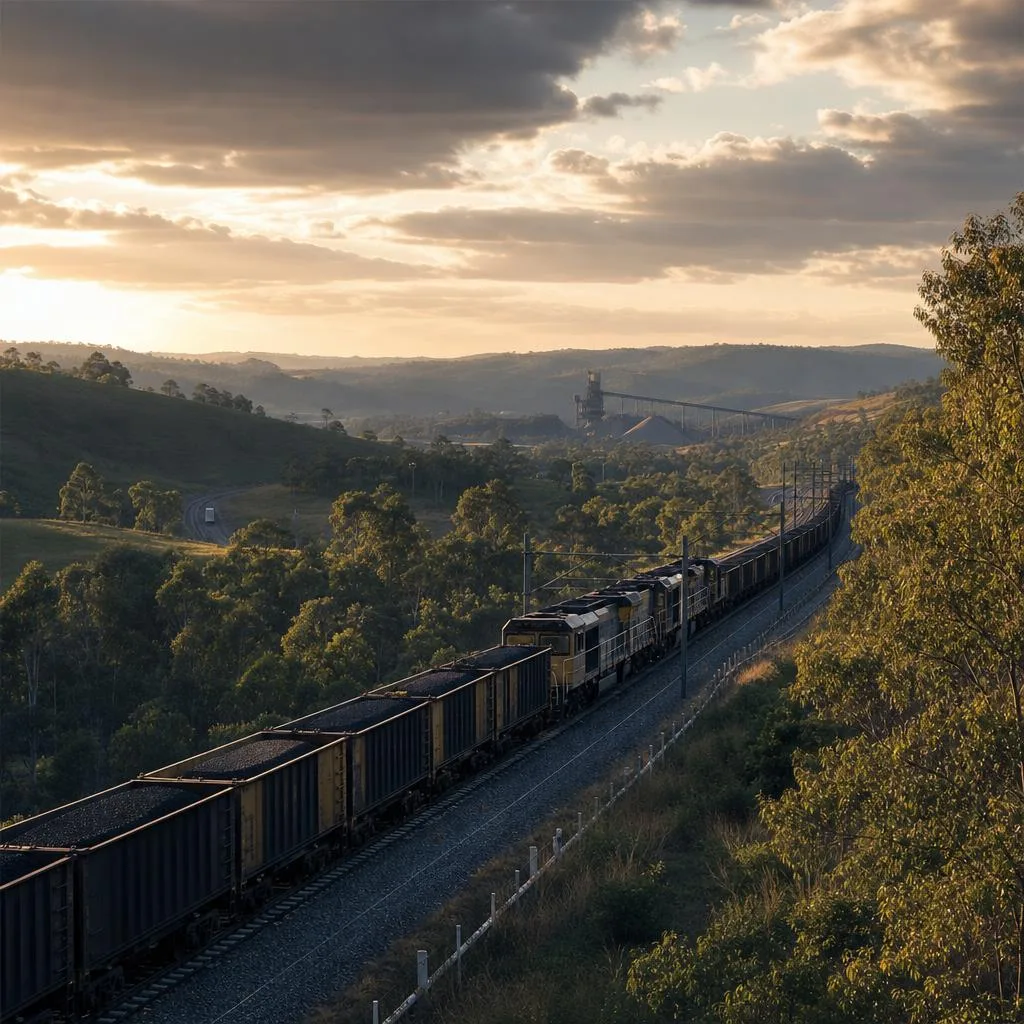
A runaway coal train in the Hunter Valley is a serious loss-of-control event that shows why strong safety systems, clear decisions and operational discipline matter.
Key takeaways
- A runaway coal train is usually a systems failure, not simply an individual mistake.
- Effective businesses control risk through clear procedures, training, maintenance and escalation rules.
- Leaders should test what happens when normal controls fail, not only when operations run smoothly.
- A practical risk register can turn lessons from the Hunter Valley coal network into better business decisions.
What happened in the runaway coal train Hunter Valley story?
The runaway coal train Hunter Valley story refers to a serious rail safety event in which a loaded coal train moved without effective control. Public interest in the event continues because it raises important questions about braking, communication, supervision, maintenance and emergency response.
Exact details can vary between media reports, witness accounts and formal investigation findings. For that reason, readers should rely on reports from official transport safety authorities, rail operators and regulators when checking the historical record. The wider lesson is clear: a complex operation can become dangerous when several small weaknesses line up at the same time.
Coal trains operate in a demanding environment. They may carry heavy loads over long distances, use multiple locomotives, travel through changing grades and depend on coordinated work between drivers, controllers, maintenance teams and network managers. A failure in one area can create pressure in another.
Why is a runaway coal train dangerous?
A runaway coal train is dangerous because its mass and momentum can make stopping difficult once control is lost. The risk may include collisions, derailment, damage to infrastructure, injuries, environmental harm and disruption to the wider rail network.
The danger is not limited to the train itself. A rail corridor connects mines, ports, communities, roads and other businesses. An incident can therefore create a chain reaction involving emergency services, customers, suppliers and local residents.
| Risk area | Possible consequence | Business lesson |
|---|---|---|
| Equipment failure | Loss of braking or control | Maintain critical assets and verify inspection quality |
| Communication failure | Delayed or conflicting decisions | Use clear escalation channels and backup methods |
| Training gaps | Slow or incorrect response | Practise rare but high-impact scenarios |
| Weak oversight | Repeated problems remain hidden | Track leading indicators and audit controls |
| Production pressure | Safety concerns are overlooked | Give people authority to stop unsafe work |
What can businesses learn from a Hunter Valley coal train runaway?
Businesses can learn that reliable performance depends on systems, not heroics. If a process works only because one experienced person notices every problem, it is not resilient enough to support safe growth.
The Hunter Valley coal train runaway also highlights the need to prepare for combinations of failures. A company may have a procedure, trained employees and good equipment, yet still face serious exposure if those controls are not connected.
How should leaders identify connected risks?
Leaders should map the full path from an initial problem to its worst credible outcome. This approach reveals dependencies that a basic checklist may miss.
- Choose a critical process, such as dispatch, payroll, customer onboarding or inventory replenishment.
- List the people, technology, suppliers and decisions the process depends on.
- Ask what happens if each dependency fails at the busiest or most stressful time.
- Identify safeguards that prevent the problem, detect it early or reduce the damage.
- Assign an owner, review date and measurable test for every important safeguard.
For example, an online retailer may depend on a payment gateway, warehouse software, courier collection and customer service. A failure in one system can quickly affect all four areas. Mapping the chain helps the owner create backup processes before a crisis occurs.
Which operational controls prevent a runaway coal train?
Operational controls prevent a runaway coal train by combining engineering safeguards, competent people, reliable procedures and independent oversight. No single control should be expected to protect the entire operation.
In a business, the same principle applies. A written procedure is useful, but it must be supported by training, system permissions, quality checks and management review.
What are the most useful controls for a growing business?
The most useful controls are simple enough to follow and strong enough to detect failure early. They should also be visible to the people who do the work.
- Critical process checklists: Define the few actions that must happen every time.
- Approval limits: Set clear thresholds for spending, discounts, hiring and operational changes.
- Exception reporting: Make unusual delays, errors and near misses easy to report.
- Preventive maintenance: Schedule checks before equipment, software or facilities fail.
- Separation of duties: Avoid giving one person complete control over a high-risk transaction.
- Stop-work authority: Allow employees to pause work when they see a serious risk.
- Post-incident reviews: Examine system causes instead of searching only for someone to blame.
How should a company investigate a runaway coal train type of incident?
A company should investigate a runaway coal train type of incident by securing facts, protecting people, preserving evidence and examining the system that allowed the event to develop.
The first priority is safety and emergency response. After the immediate danger is controlled, leaders should avoid speculation and follow a structured review. A rushed explanation can hide deeper causes and create unfair conclusions.
- Stabilise the situation: Protect people, customers, assets and the public.
- Record the facts: Capture times, decisions, system alerts, conversations and conditions.
- Separate facts from assumptions: Mark what is confirmed, uncertain or still under review.
- Build a timeline: Show what happened before, during and after the loss of control.
- Find contributing factors: Review training, workload, design, maintenance, communication and supervision.
- Fix the system: Assign corrective actions with owners, deadlines and success measures.
- Verify the change: Test whether the new control works in normal and stressful conditions.
This process is more valuable than simply asking who made the last mistake. People often act within the information, incentives and tools available to them. Improving those conditions reduces the chance of a repeat event.
How can small businesses build stronger risk management?
Small businesses can build stronger risk management by focusing first on the few events that could seriously harm people, cash flow, customers or reputation. A large manual is not required; a clear risk register and regular review are a strong starting point.
What should a practical risk register include?
A practical risk register should identify the risk, its likely impact, current controls, responsible owner and next action. It should be reviewed when the business changes, not only once a year.
| Risk register field | Example question |
|---|---|
| Risk description | What could go wrong? |
| Cause | Why could it happen? |
| Impact | What would be the cost or harm? |
| Likelihood | How often could it occur? |
| Existing control | What currently reduces the risk? |
| Owner | Who is accountable for action? |
| Next review | When will the control be tested? |
Start with five risks. For a service business, these may include a key employee leaving, a cyber incident, a major client ending its contract, a cash-flow shortfall and a serious customer complaint. Rank them by impact and urgency, then address the highest exposures first.
What does the Hunter Valley coal train incident teach about leadership?
The Hunter Valley coal train incident teaches that leadership means creating conditions where safe and accurate decisions are possible under pressure. Leaders must set priorities before an emergency, communicate them often and act consistently when targets compete with safety.
Strong leaders also make it safe to report weak signals. A near miss, repeated software error or overdue maintenance task may appear minor in isolation. Together, these signals can show that a system is becoming unstable.
Use weekly operating reviews to ask three direct questions: What nearly went wrong? Which control was harder to follow than expected? What decision is being delayed because ownership is unclear? These questions turn risk management into a normal management habit.
How can businesses prepare for a runaway coal train style emergency?
Businesses can prepare for a runaway coal train style emergency by creating a short response plan, assigning decision-makers and rehearsing the plan before a crisis occurs.
- Name the person who leads the response and the person who takes over if they are unavailable.
- List the first actions for protecting people, customers, data and cash.
- Record emergency contacts for staff, suppliers, insurers, landlords, regulators and professional advisers.
- Prepare approved messages for employees, customers and other stakeholders.
- Define when normal operations should stop and when external help is required.
- Run a tabletop exercise and record every point of confusion.
- Update the plan after the exercise and repeat it at least annually.
A good plan does not predict every detail. It gives people a shared structure for making decisions when facts are incomplete and time is limited.
Frequently asked questions about the runaway coal train
What is a runaway coal train?
A runaway coal train is a train that moves without adequate control, including situations where braking, propulsion management or operating procedures fail to stop or regulate its movement.
Where did the Hunter Valley coal train runaway occur?
The phrase Hunter Valley coal train runaway may refer to a specific historical rail safety event, but the exact location and circumstances should be confirmed through the relevant official investigation rather than relying on unsourced summaries.
Why are coal trains important in the Hunter Valley?
Coal trains are a major part of the Hunter Valley rail network, moving bulk freight between mining regions and export facilities. Their scale makes disciplined network management and safety controls especially important.
What is the main business lesson from a runaway coal train?
The main lesson is that resilience comes from layered controls, clear accountability, early reporting and regular testing. Businesses should design systems that remain safe when people, technology or conditions do not perform as expected.
How can Modern Marks help improve business resilience?
Modern Marks Business Consultants helps business owners turn operational pressure into a clear plan for sustainable growth. A review can reveal process gaps, unclear responsibilities, cash-flow risks and leadership bottlenecks before they become expensive problems.
Start with the Free Business Health Audit. It gives you a practical way to assess the health of your business, identify priority risks and choose the next actions that will strengthen your operations.
