
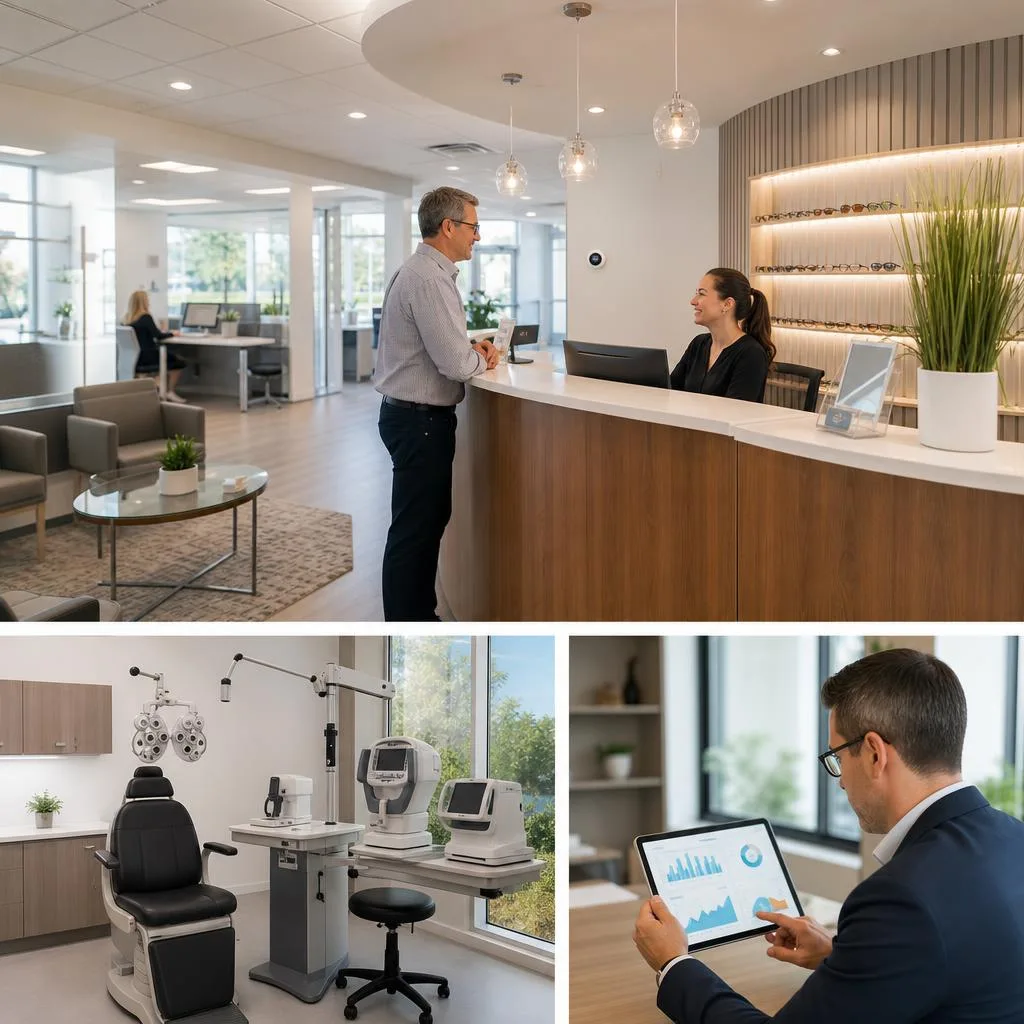
Energy management for optometry practices reduces operating costs by measuring usage, improving equipment schedules, and controlling heating, cooling, and lighting.
Key takeaways
- Start with an energy audit that identifies waste in lighting, HVAC, diagnostic equipment, and daily routines.
- Use schedules, smart controls, and preventive maintenance to lower energy use without reducing patient comfort.
- Protect sensitive optometry equipment with power-quality checks, surge protection, and backup planning.
- Track monthly energy costs and usage per patient visit to measure the return on each improvement.
- Use a phased plan so your practice can achieve quick savings before investing in larger upgrades.
Why does energy management matter for optometry practices?
Energy management matters because an optometry practice uses power throughout the day for patient comfort, clinical equipment, computers, sterilization, refrigeration, and lighting. Small inefficiencies can become a large recurring expense when they run every business day.
Energy costs also affect the patient experience. A poorly controlled waiting room may feel too hot, too cold, or poorly lit. Unplanned equipment shutdowns can delay appointments. A strong energy plan helps owners control costs while keeping the clinic safe, comfortable, and reliable.
For example, an examination room may use overhead lights, task lighting, a computer, an autorefractor, a retinal camera, and climate control at the same time. If equipment stays on after the last appointment, the practice pays for energy that creates no business value.
What should an energy management solution for optometry clinics include?
An energy management solution for optometry clinics should combine an energy assessment, equipment controls, maintenance routines, staff training, and monthly performance tracking.
The best solution is not always the most expensive technology. It should match the clinic’s size, lease terms, operating hours, equipment needs, and growth plans. A small office may need better scheduling and LED lighting first, while a larger clinic may benefit from submetering, building automation, or solar planning.
| Solution area | What to review | Potential benefit |
|---|---|---|
| Lighting | LED fixtures, occupancy sensors, daylight use | Lower lighting demand and cooler rooms |
| HVAC | Thermostat settings, filters, zones, service records | More stable comfort and less wasted heating or cooling |
| Clinical equipment | Idle settings, shutdown schedules, power quality | Reduced standby use and better equipment protection |
| Office technology | Computers, monitors, printers, servers | Lower after-hours consumption |
| Refrigeration and sterilization | Door seals, cycle timing, maintenance, loading | Improved performance and lower avoidable demand |
How can an optometry practice complete an energy audit?
An optometry practice can complete an energy audit by collecting bills, inspecting equipment, observing daily behavior, and ranking improvements by cost and impact.
- Collect 12 months of utility bills. Record total usage, demand charges, seasonal changes, and unusual spikes. If the clinic shares a building meter, request usage details from the landlord.
- Map the practice. List every room, major device, light fixture, thermostat, refrigerator, sterilizer, water heater, and server. Note the age and operating schedule of each item.
- Observe a full workday. Check what runs before opening, during patient hours, at lunch, and after closing. Look for lights, monitors, HVAC zones, and diagnostic systems that remain active without a clear reason.
- Inspect maintenance conditions. Check HVAC filters, blocked vents, dirty coils, refrigerator seals, and equipment alarms. Poor maintenance often increases energy use before a major repair is needed.
- Rank opportunities. Separate no-cost actions, low-cost improvements, and capital projects. Estimate savings, implementation time, and any effect on clinical operations.
- Set a baseline. Track monthly kilowatt-hours, energy cost, operating days, and patient visits before making major changes. This gives the team a fair comparison later.
A professional audit can add value when bills are complex, equipment is aging, or the practice is planning a remodel. Ask for a clear report with measured findings, estimated savings, project costs, and a proposed timeline.
Which energy upgrades deliver the fastest savings?
The fastest energy savings usually come from scheduling, LED lighting, HVAC maintenance, and automatic controls because these changes reduce waste without changing clinical services.
Can better scheduling reduce energy waste?
Yes, better scheduling can reduce energy waste by aligning equipment and building controls with actual patient and staff hours.
Create a standard opening and closing checklist. Set computers and displays to sleep when idle. Turn on diagnostic devices shortly before the first appointment instead of at the start of the day. Turn off approved equipment after the final patient, while following manufacturer guidance for devices that require continuous operation.
Use different schedules for weekdays, weekends, holidays, and extended clinic hours. A smart thermostat can reduce heating or cooling during unoccupied periods, but temperature limits should protect equipment and prevent uncomfortable conditions when staff arrive.
How do lighting and HVAC improvements lower costs?
LED lighting lowers electricity use and heat output, while efficient HVAC operation reduces the cost of maintaining a comfortable temperature.
Replace older fluorescent or halogen lamps with quality LEDs that provide suitable color rendering for clinical work. Add occupancy sensors in storage rooms, restrooms, staff areas, and other spaces that are not continuously occupied. Avoid sensors in rooms where sudden darkness could disrupt a patient examination.
For HVAC, replace filters on schedule, keep supply and return vents clear, and check that thermostats are accurate. Ask a qualified technician to inspect refrigerant levels, coils, duct losses, and controls. Do not make temperature changes that conflict with medical, safety, or manufacturer requirements.
| Action | Typical effort | Best first step |
|---|---|---|
| Adjust operating schedules | Low | Compare equipment run times with appointment hours |
| Replace high-use lights with LEDs | Low to medium | Start with reception, hallways, and exam rooms |
| Service HVAC equipment | Medium | Review filters, coils, vents, and thermostat accuracy |
| Install occupancy controls | Medium | Use them in low-traffic support areas |
| Upgrade major equipment | High | Prioritize replacements nearing end of life |
How can practices protect optometry equipment while saving energy?
Practices can protect optometry equipment by combining approved shutdown procedures with power-quality monitoring, surge protection, backup power, and regular maintenance.
Energy reduction should never mean switching off equipment in a way that voids a warranty or harms calibration. Create a device register that shows whether each item should be powered down, placed in standby mode, or left on. Confirm requirements with the manufacturer or service provider.
Consider a power-quality review if the clinic experiences flickering lights, unexplained resets, overheating, or repeated equipment faults. Surge protection and uninterruptible power supplies may help protect computers and selected critical systems. A generator or broader backup plan may be appropriate for clinics that must preserve refrigeration, connectivity, or patient records during outages.
Maintenance is also an energy strategy. Clean equipment can run more efficiently, and early fault detection can prevent emergency repairs. Include filters, fans, compressors, batteries, and ventilation in the practice maintenance calendar.
What energy solutions for barbers can teach growing service businesses?
Energy solutions for barbers show how simple operating controls can reduce costs in any customer-facing service business.
Barbershops often use bright lighting, hair dryers, hot towel equipment, water heaters, laundry machines, and HVAC systems. Useful actions include installing efficient dryers, reducing hot-water waste, scheduling laundry during lower-cost periods when appropriate, and turning off styling stations between appointments.
The same principle applies to optometry: identify the equipment that runs most often, measure when it is truly needed, and make the efficient choice easy for staff. A one-page closing checklist can be more effective than a complicated policy that no one follows.
What energy management solution works for medical spa centers?
An energy management solution for medical spa centers should coordinate treatment-room equipment, lighting, HVAC, laundry, water heating, refrigeration, and appointment schedules.
Medical spas may have lasers, sterilizers, heated beds, towel warmers, pumps, and specialized climate needs. Managers should divide equipment into three groups: always-on systems, scheduled systems, and shutdown-approved systems. This prevents staff from making unsafe assumptions.
Medical spas and optometry clinics can also use room-level controls. Keep treatment rooms at appropriate comfort levels when occupied, then use approved setback settings between appointments. Track energy use against appointments or treatment hours, rather than looking only at the total monthly bill.
How should an optometry practice measure energy performance?
An optometry practice should measure energy performance with monthly kilowatt-hours, total energy cost, peak demand where applicable, operating days, and patient visits.
Use a simple dashboard that compares current results with the baseline. A fall in total usage is helpful, but it may also reflect fewer appointments. Normalizing the data creates a fairer view of performance.
| Metric | Formula or method | Why it matters |
|---|---|---|
| Monthly energy cost | Utility bill total | Shows direct financial impact |
| Energy use | Total kilowatt-hours | Shows consumption independent of tariff changes |
| Cost per patient visit | Monthly energy cost divided by visits | Links energy performance to business activity |
| After-hours usage | Overnight or closed-period meter data | Reveals equipment and HVAC waste |
| Peak demand | Highest recorded demand charge period | Identifies opportunities to reduce costly spikes |
Review the dashboard once a month in a short team meeting. Celebrate improvements, investigate unusual changes, and assign one owner to each corrective action. Consistent review turns energy management from a one-time project into an operating habit.
What is a practical 90-day energy management plan?
A practical 90-day energy management plan starts with measurement, applies low-cost improvements, and then selects larger projects using evidence.
- Days 1–30: Measure and organize. Gather bills, create the equipment register, document operating hours, and identify the largest energy users. Ask staff where they notice comfort or equipment problems.
- Days 31–60: Fix avoidable waste. Adjust schedules, install approved power controls, replace priority lamps, service HVAC filters, and introduce opening and closing checklists.
- Days 61–90: Verify and invest. Compare results with the baseline, calculate cost savings, and choose capital projects such as HVAC upgrades, submetering, insulation, or renewable energy reviews.
Set a budget for each phase. Some actions can be completed by staff, while electrical, HVAC, and equipment work should be handled by qualified professionals. Document approvals and safety requirements before any installation.
What common mistakes should optometry practice owners avoid?
Practice owners should avoid treating energy management as a one-time equipment purchase, ignoring staff behavior, or choosing upgrades without checking safety and payback.
- Buying technology without data: Smart controls are useful only when they solve a known problem.
- Ignoring shared utilities: Confirm how a landlord calculates common-area charges and whether submetering is possible.
- Using one temperature for every room: Different spaces may have different comfort, equipment, and occupancy needs.
- Skipping manufacturer guidance: Energy savings are not worth damaging clinical equipment or affecting patient care.
- Failing to train staff: Explain what to turn off, what to leave on, and whom to contact when something seems wrong.
- Measuring only dollars: Utility rates change, so track usage as well as cost.
What are the most common questions about energy management for clinics?
How can a small optometry practice reduce energy costs?
A small optometry practice can reduce energy costs by adjusting schedules, using LEDs, maintaining HVAC systems, managing computer sleep settings, and tracking monthly usage.
Is an energy audit worth it for a medical practice?
An energy audit is often worth it when utility bills are rising, equipment is aging, comfort is inconsistent, or the practice is planning a renovation.
What is the best energy management solution for optometry clinics?
The best energy management solution for optometry clinics combines accurate measurement, safe equipment schedules, efficient lighting and HVAC, staff accountability, and ongoing review.
How can Modern Marks help improve business performance?
Modern Marks Business Consultants helps business owners turn operational problems into clear, measurable improvement plans. Energy management is one part of a wider business system that can include cost control, process design, staffing, customer experience, and growth planning.
Start with the Free Business Health Audit to identify the operational strengths, risks, and opportunities affecting your business. Use the findings to build a focused plan for a more efficient, resilient, and scalable practice.
