
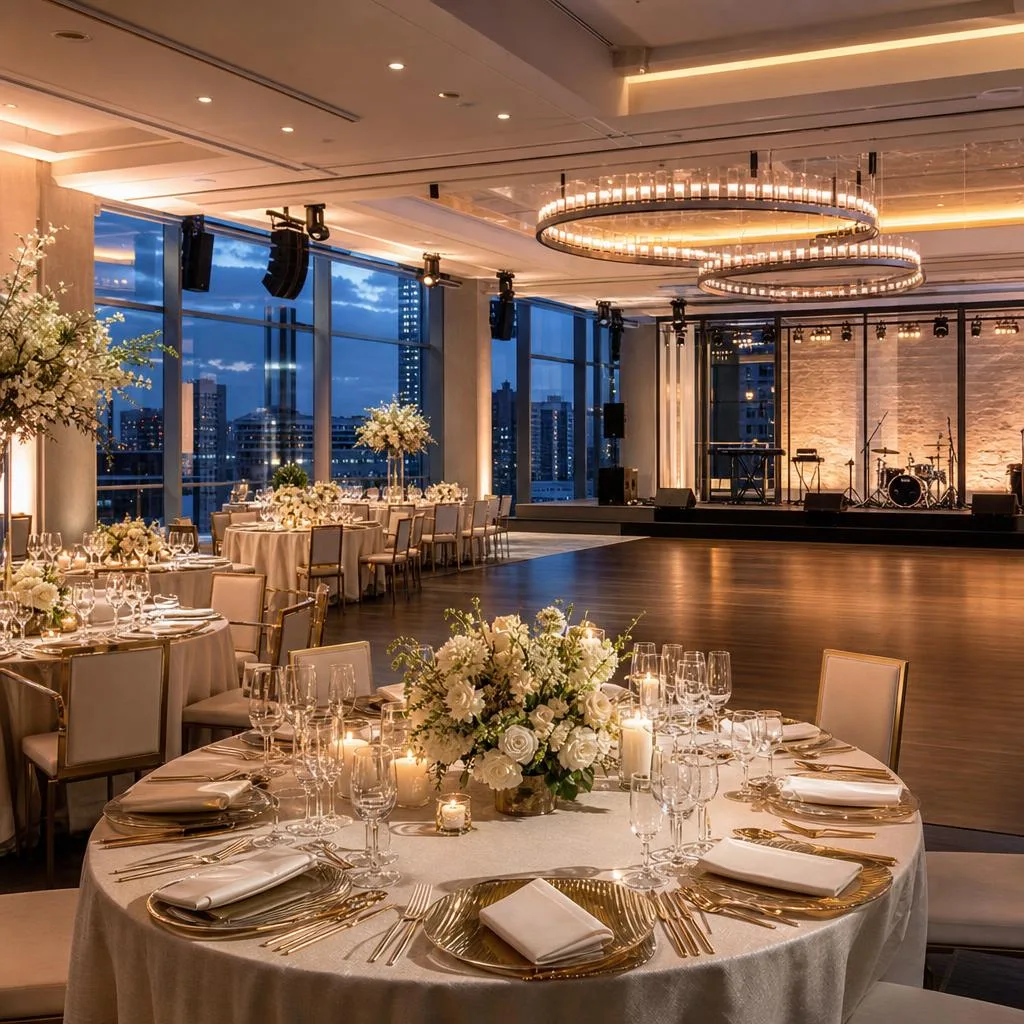
Yes, event spaces can be profitable in 2026 when owners control fixed costs, price every event correctly, and keep enough dates booked throughout the year.
Key takeaways
- Event spaces can earn strong returns from weddings, corporate events, parties, meetings, and community gatherings.
- Profit depends more on utilization, labor, overhead, and contribution margin than on rental price alone.
- Wedding venues can make good money, but seasonality, food costs, staffing, and marketing can reduce net income.
- A monthly financial model should test pricing, break-even bookings, cash reserves, and debt before you invest.
- Additional services such as catering, bar packages, décor, technology, and staffing can raise revenue per event.
Are event spaces profitable in 2026?
Event spaces are profitable when total booking revenue exceeds property costs, event costs, payroll, marketing, insurance, and other operating expenses. The opportunity is attractive because one building can serve several customer groups. A venue might host a wedding on Saturday, a corporate meeting on Tuesday, and a birthday party on Friday.
However, an empty calendar creates serious financial pressure. Rent, mortgage payments, insurance, utilities, software, and core management costs continue even when no event is taking place. The most successful owners manage the venue as both a hospitality business and a real estate operation.
Focus on three numbers before judging the opportunity:
- Average revenue per event: The total amount collected for the space, services, packages, and approved add-ons.
- Contribution margin: The revenue left after event-specific costs such as food, servers, rentals, cleaning, and alcohol.
- Utilization: The percentage of available dates and time blocks that are sold at profitable prices.
What determines an event venue’s profit margin?
An event venue’s profit margin is mainly determined by utilization, pricing, variable costs, and fixed overhead. Two venues with the same capacity can produce very different results if one sells more weekday dates and controls labor more effectively.
| Profit driver | Why it matters | Practical improvement |
|---|---|---|
| Capacity | A larger space can serve bigger groups but usually costs more to build and operate. | Match capacity to local demand, parking, and permitted occupancy. |
| Utilization | More profitable bookings spread fixed costs across more events. | Sell weekday, Sunday, morning, and off-season packages. |
| Average booking value | Higher revenue per event improves cash flow without requiring more dates. | Bundle catering, décor, lighting, technology, and coordination. |
| Variable costs | Food, labor, alcohol, rentals, and cleanup can quickly reduce gross profit. | Use event budgets, vendor agreements, portion controls, and labor plans. |
| Fixed overhead | Rent, debt, insurance, and utilities continue during slow periods. | Negotiate the lease and maintain a reserve for seasonal dips. |
What is a typical banquet hall profit margin?
A typical banquet hall profit margin varies by market and business model, but a well-run venue may target a 10% to 25% net operating margin after normal operating expenses. Gross margin may look much higher before payroll, property costs, marketing, repairs, and debt service are included.
Consider a simple example: a hall hosts 12 events per month at an average booking value of $8,000. Revenue is $96,000. If food, event labor, rentals, alcohol, and other direct costs equal 45%, the venue has $52,800 available for fixed expenses. After $40,000 in rent, insurance, utilities, marketing, and administration, estimated operating profit is $12,800.
| Monthly model | Example amount |
|---|---|
| 12 events × $8,000 | $96,000 revenue |
| Event-specific costs at 45% | -$43,200 |
| Contribution after event costs | $52,800 |
| Fixed operating expenses | -$40,000 |
| Estimated operating profit | $12,800 |
| Estimated operating margin | 13.3% |
This is an illustration, not a promise. Track profit by event, package, and customer type. A lower-priced venue with full weekday utilization may outperform a luxury venue with high prices and frequent cancellations.
Are wedding venues profitable, and do wedding venues make good money?
Wedding venues can be profitable and can make good money when they have strong local demand, a clear brand, profitable packages, and enough non-wedding business to reduce seasonality. Weddings often produce high booking values because clients may purchase the ceremony site, reception space, food, bar service, furniture, décor, and coordination together.
Still, wedding revenue is not the same as profit. A $20,000 package might include $12,000 in food, labor, rentals, and vendor costs before property overhead is paid. Owners should calculate the contribution margin of every package and add-on rather than relying on total sales.
- Site rental with defined setup, event, and cleanup times.
- Preferred catering and bar packages with controlled costs.
- Tables, chairs, linens, lighting, and sound equipment.
- Ceremony areas and getting-ready suites.
- Coordination, security, valet, or shuttle services.
- Corporate, nonprofit, holiday, and private events during slower months.
How do you calculate whether an event space will make money?
You can calculate whether an event space will make money by modeling demand, revenue, event-level costs, fixed expenses, taxes, debt, and cash needs month by month. Use conservative assumptions instead of your best-case forecast.
- Validate demand. Count competing venues, local businesses, population trends, wedding inquiries, tourism, and seasonal events. Interview planners and potential customers about preferred dates, features, and prices.
- Confirm operating limits. Check legal occupancy, parking, noise rules, loading access, kitchen capacity, accessibility, and how many events your team can support.
- Create three scenarios. Build conservative, expected, and optimistic forecasts with different booking counts, average prices, cancellation rates, and seasonal patterns.
- Separate variable and fixed costs. Variable costs rise with every event. Fixed costs remain mostly steady. This shows how much each additional booking contributes toward profit.
- Calculate break-even. Divide monthly fixed costs by contribution profit per event. For example, $40,000 in fixed costs divided by $4,000 contribution per event means 10 events are needed each month to break even.
- Stress-test the plan. Reduce bookings, raise labor costs, delay the opening, and add repair expenses. If small changes cause a cash crisis, improve the model before investing.
What startup costs should an event venue budget for?
Startup costs for an event venue usually include property, renovation, equipment, permits, insurance, launch marketing, hiring, and working capital. The amount may range from a modest investment for a small gathering space to several million dollars for a purpose-built venue.
| Cost category | Typical examples | Planning guidance |
|---|---|---|
| Property | Deposit, purchase, leasehold improvements, mortgage | Confirm zoning, occupancy, parking, and permitted use first. |
| Renovation | Restrooms, flooring, lighting, acoustics, kitchen, accessibility | Obtain contractor bids and add a contingency reserve. |
| Equipment | Tables, chairs, linens, refrigeration, sound, POS tools | Buy equipment that supports your most profitable packages. |
| Compliance | Permits, licenses, inspections, insurance, fire safety | Check local requirements before signing a lease or purchase agreement. |
| Launch and working capital | Website, photography, advertising, payroll, utilities, supplies | Budget for several slow months after opening. |
Do not spend heavily on design before validating the business model. A beautiful venue can still lose money if parking is poor, access is difficult, zoning is restrictive, or customers prefer another location and price range.
How can you finance a wedding venue?
You may finance a wedding venue with commercial real estate loans, Small Business Administration-backed loans, equipment financing, lines of credit, investor capital, or owner funds. The best option depends on the property, your credit, available equity, collateral, and projected cash flow.
A lender will want evidence that the venue can repay debt under realistic conditions. Prepare a business plan, market analysis, startup budget, contractor estimates, monthly projections, debt-service calculations, management résumé, permits, and marketing plan. Match the loan term to the asset; long-term improvements should not usually depend on expensive short-term debt.
Keep cash available for repairs, refunds, seasonal slowdowns, delayed customer payments, and unexpected compliance work. A venue can be profitable on paper and still fail if it runs out of cash in its first year.
How can an event space become more profitable?
An event space becomes more profitable by increasing profitable bookings, raising average revenue per event, and reducing waste without weakening the customer experience.
How can a venue increase bookings?
A venue can increase bookings by serving several customer segments and making it easy to request a quote. Create separate landing pages for weddings, corporate meetings, birthday parties, nonprofit events, workshops, and holiday gatherings.
- Show real photos, floor plans, capacity limits, parking details, and package prices.
- Respond to qualified inquiries within one business day.
- Offer tours during consistent weekly time blocks.
- Build referral partnerships with planners, hotels, photographers, caterers, and local employers.
- Use weekday and off-season pricing to fill dates that would otherwise remain empty.
How can a venue raise revenue per event?
A venue can raise revenue per event by offering useful, clearly priced add-ons with healthy margins. Consider upgraded lighting, premium bar service, ceremony setups, extended hours, room flips, specialty furniture, technology, and event coordination.
Train staff to recommend upgrades based on client needs rather than pushing every option. Clear packages reduce confusion, speed up decisions, and make it easier to forecast labor and supplies.
How can an owner control event venue operating costs?
An owner can control operating costs by scheduling labor from the event timeline, standardizing supplies, negotiating vendor rates, and reviewing event profitability every month.
- Schedule setup, service, and cleanup labor separately.
- Track food waste, breakage, overtime, and complimentary items.
- Inspect the property regularly to catch small maintenance problems early.
- Use deposits and cancellation policies to protect cash flow.
- Review insurance, software, utilities, and vendor contracts each year.
What are the biggest risks of owning an event venue?
The biggest risks are seasonal demand, high fixed costs, cancellations, regulation changes, property damage, staffing shortages, and weak local demand. These risks can be reduced with contracts, reserves, diversified bookings, and careful site selection.
Require signed contracts, deposits, clear cancellation terms, certificates of insurance when appropriate, and documented rules for alcohol, décor, noise, and cleanup. Create checklists, train an event manager, and use software for contracts, payments, calendars, and follow-up. A venue is more valuable when it can operate consistently without the owner handling every detail.
Are event venues profitable for first-time owners?
Event venues can be profitable for first-time owners, but beginners should validate demand and limit operating risk before committing to a property. Experience in hospitality, sales, finance, property management, or event planning helps, while strong systems and professional guidance can close knowledge gaps.
Before signing a lease or purchase agreement, tour competing spaces, interview planners, request vendor pricing, and test demand with a landing page or small promotional campaign. If customers will not inquire at your planned price before you commit, the property is unlikely to solve the problem.
What are the most common questions about event venue profitability?
Do wedding venues make good money?
Wedding venues can make good money when they maintain strong contribution margins, sell multiple services, and fill enough dates to cover fixed costs. Annual profit depends on local demand, seasonality, labor, debt, pricing, and operating discipline.
What is a good banquet hall profit margin?
A good banquet hall profit margin is often a 10% to 25% net operating margin after expenses, although results vary by market and service model. Track gross and net margins separately so high sales do not hide weak profitability.
Can I get a business loan for a wedding venue?
You may qualify for a business loan for a wedding venue if you can show adequate equity, credit strength, collateral, realistic projections, permits, and a clear repayment plan. Lenders also review market demand and management experience.
Are event venues profitable outside wedding season?
Event venues can be profitable outside wedding season by serving corporate meetings, holiday parties, fundraisers, workshops, conferences, birthdays, and community events. A diverse calendar reduces dependence on a small number of peak weekends.
How can Modern Marks help you evaluate an event space?
Modern Marks Business Consultants can help you turn a venue idea into a practical operating plan, financial model, and growth strategy. Before you purchase property, sign a lease, or apply for financing, identify weaknesses in cash flow, marketing, operations, pricing, and scalability.
Take the Free Business Health Audit at modernmarks.earth/audit. The results can help you decide whether your event space is ready to grow, needs a different pricing model, or should wait until the numbers support the investment.
