
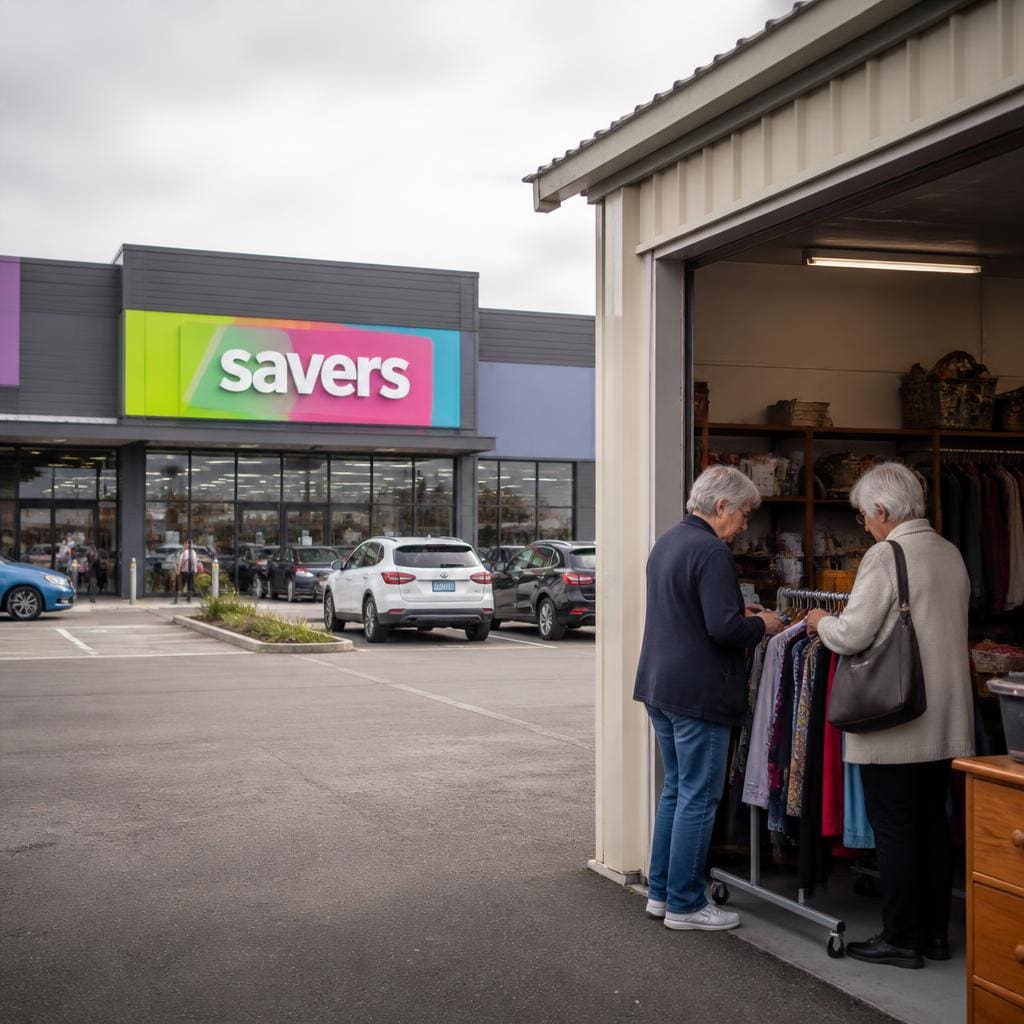
Reporting from ABC Business (Australia) says charity op shops in Geelong are feeling threatened by the arrival of Savers, a large US thrift chain. The development puts a familiar small-business challenge in sharp focus: how can smaller, purpose-driven operators respond when a much larger retail name enters the local market?
For owners, the first step is to separate concern from assumption. A new competitor may attract attention, but that does not automatically determine how customers will shop. Charity op shops can assess what their customers value most, including the organisation’s purpose, local connection, service and the distinctiveness of its stock. Those advantages should be communicated clearly and consistently.
The story also highlights the importance of operational discipline. Smaller retailers may not be able to match a major chain’s scale, but they can review pricing, merchandising, opening hours, donation handling and volunteer or staff experience. Simple improvements in how products are presented and how the shop communicates its value can help protect customer loyalty without requiring a large expansion.
There is a broader lesson for small and mid-sized businesses across Australia, New Zealand and North America: competitive pressure is a reason to sharpen the customer proposition, not merely to imitate a larger rival. Owners should monitor customer response, identify their strongest points of difference and make measured changes based on evidence. In Geelong, the arrival of Savers has created that test for local charity op shops.
Source: ABC Business (Australia).
